
What Is a 10–2 Jury Verdict?

A non-unanimous verdict, (often referred to as a 10-2 jury verdict) allowed someone to be convicted of a serious crime even when two jurors believed the defendant was not guilty.
For more than 120 years, Louisiana permitted criminal convictions without a unanimous jury decision.
Instead of requiring all 12 jurors to agree, the law allowed 10 jurors to convict and ignore the votes of two dissenting jurors.
This system was introduced in 1898 during Louisiana’s Jim Crow constitutional convention, where lawmakers openly sought to weaken the influence of Black jurors serving on juries.
In 2018, Louisiana voters overwhelmingly approved a constitutional amendment ending non-unanimous jury verdicts.
In 2020, the U.S. Supreme Court confirmed in Ramos v. Louisiana that these verdicts violate the Constitution.
However, the decision did not apply retroactively, meaning many people convicted under the old system remain incarcerated today.

From Emancipation to Convict Leasing
After the Civil War and the formal end of slavery in 1865, systems of labor control did not disappear, they were reshaped. Across the South, new laws known as Black Codes criminalized minor offenses and led many newly freed Black men into forced labor through a system known as convict leasing.

What Happened After
Non-Unanimous Juries Were Declared Unconstitutional?
In 2018, Louisiana voters overwhelmingly approved a constitutional amendment requiring unanimous jury verdicts for future felony trials.
In 2020, the U.S. Supreme Court confirmed in Ramos v. Louisiana that non-unanimous jury verdicts violate the Constitution.
However, because the decision was not applied retroactively, hundreds of people convicted under the old system remain incarcerated today.

The 2026 Legislative
Heartbreaking Updates
The 2026 Louisiana Legislative Session brought renewed hope for individuals still incarcerated under non-unanimous jury convictions, but ultimately ended without meaningful relief.
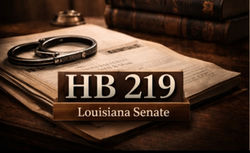
HB 532 sought to remove the constitutional provision allowing 10–2 jury verdicts for crimes committed before 2019, but never advanced out of committee. SB 215 proposed a special review process for individuals convicted by non-unanimous juries, yet stalled before final Senate passage. HB 219 proposed a sentencing review process to identify potential miscarriages of justice, but was voluntarily deferred in a 9–0 vote. HB 491 offered expanded parole eligibility after 25 years for certain individuals serving life sentences, but was also voluntarily deferred in a 10–0 vote. Despite multiple opportunities to address the lasting consequences of Louisiana's discriminatory jury system, none of these proposals became law. For the individuals and families who have spent decades waiting for justice, another legislative session ended with unanswered questions, continued incarceration, and the painful reality that meaningful reform remains unfinished.
Louisiana lawmakers failed to pass any of the several proposals that could have determine whether the hundreds of people convicted under non-unanimous jury verdicts received relief.
~ CLICK ON THE BILLS BELOW FOR DIRECT ACCESS TO READ ABOUT EACH BILL ~
 |  |  |
|---|---|---|
 |
The 2025 Legislative
Turning Point
In 2025, Louisiana lawmakers began taking meaningful steps to address the lasting consequences of the state’s former non-unanimous jury system, which allowed convictions even when jurors disagreed.
Although Louisiana voters ended the practice in 2018 and the U.S. Supreme Court ruled it unconstitutional in 2020, hundreds of people remain incarcerated under those earlier verdicts.
Several legislative measures introduced in 2025 helped bring renewed attention to the issue and laid the foundation for the reform proposals being debated today.

Justice Review Commission
Senate Bill 218 created a commission to study the lasting impact of Louisiana’s former non-unanimous jury system. The commission was tasked with reviewing available data, examining the number of individuals still incarcerated under split jury verdicts, and identifying potential legal and legislative responses. Lawmakers sought to better understand how past convictions were affected by the system and what steps might be necessary to address them. The work of the commission helped gather information that could guide future discussions about fairness, accountability, and possible pathways toward resolution.

House Study Resolution
House Resolution 243 called for a formal study of the individuals who remain incarcerated after being convicted by non-unanimous juries in Louisiana. The resolution directed legislative leaders to examine available case information, identify the number of affected individuals, and evaluate the broader impact on the state’s justice system. Lawmakers also considered the potential financial and administrative implications of addressing these convictions. The purpose of the study was to provide reliable data and informed analysis to support future policy decisions and legislative proposals.

Senate Study Resolution
Senate Resolution 183 established a legislative study focused on individuals still incarcerated under Louisiana’s former split-jury system. The resolution instructed the commission to collect information about the number of affected cases, review legal developments following the Supreme Court’s decision in Ramos v. Louisiana, and analyze the fiscal and procedural implications of potential remedies. The findings were intended to help lawmakers better understand the scope of the issue and to inform future legislative efforts aimed at addressing the remaining cases connected to non-unanimous verdicts.

Stand With Us -
Sign The Petition
Across Louisiana, over 900 individuals remain incarcerated under non-unanimous jury verdicts, a practice the United States Supreme Court has already ruled unconstitutional.
These individuals were convicted without all 12 jurors agreeing to guilt
-a standard that is fundamental to a fair trial.
From every nation its essential to stand as one community keeping the scales of justice balanced
Us standing together to say:
This must be corrected.
What To Do If Your Loved One Was Convicted by a 10-2 Jury in Louisiana
For many years, Louisiana allowed felony convictions even when all jurors did not agree. This meant someone could be found guilty even though members of the jury believed there was reasonable doubt.
In 2020, the United States Supreme Court ruled in Ramos v. Louisiana that non-unanimous jury verdicts violate the Constitution. While the law has since changed, many individuals convicted before 2019 remain incarcerated under those earlier verdicts.
If your loved one may have been convicted by a 10-2 or non-unanimous jury, the following steps can help families begin preparing and gathering important information.


Our Hidden Nation
In prison, people often become identified by numbers, dorms, and classifications.
Over time, names are spoken less often, and identity becomes reduced to a file.
At the JAI Foundation, we choose to see something different.
We recognize the hidden community that exists behind prison walls
a nation of individuals who continue to think deeply, create, build, mentor, and grow even within confinement.
They are not statistics.
They are
Husbands & Wives,
Fathers & Mothers,
Sons & Daughters,
Brothers & Sisters,
Grandfathers & Grandmothers,
Uncles & Aunts,
Cousins,
Fiancés,
Best Friends,
Leaders within their communities.
This section exists to restore something simple but powerful:
their names beside their faces #wearenotnumbers


If you or your loved one is a 10-2 and would like to be included in the Hidden Nation gallery, please contact us. We only share images and stories with permission and care.
These images are not simply moments captured in time.
They are evidence of life, resilience, creativity, and dignity.
Every person shown here belongs to a family, a neighborhood, a community, and a future that extends far beyond prison walls.
Seeing people fully is the first step toward correcting the stain left by unconstitutional convictions in Louisiana’s justice system.
