
When a Traffic Stop Becomes a Life Sentence: Why Stories Like Jermaine Hudson’s Matter


At JAI Foundation, we often say that behind every case is a person, and behind every person is a family still waiting.
One powerful story was shared through the Burden of Guilt podcast—one that echoes far too many we have come to know.
Jermaine Hudson’s life, like many, was shaped by early hardship and encounters with the system. But what should have been just another moment—a traffic stop—became the turning point that led to a life sentence inside one of America’s harshest prisons.
A single moment. A lifetime of consequences.
As shared in the podcast, Jermaine’s case raises serious concerns: an alibi that was overlooked, a defense that may not have fully protected his rights, and a system that moved forward without fully examining the truth. Years later, questions remain—but like so many others, those questions came after the damage had already been done.
This is not just one story.
It is a pattern.
Across Louisiana and beyond, we continue to see cases where individuals were convicted under deeply flawed circumstances—where the process mattered more than the truth, and where once a sentence is handed down, meaningful opportunities for correction are limited or nonexistent.
Stories like Jermaine Hudson’s are now reaching a wider audience. They are being documented, investigated, and shared with the public in ways that are harder to ignore.
And that matters.
Because awareness is the first step toward accountability.
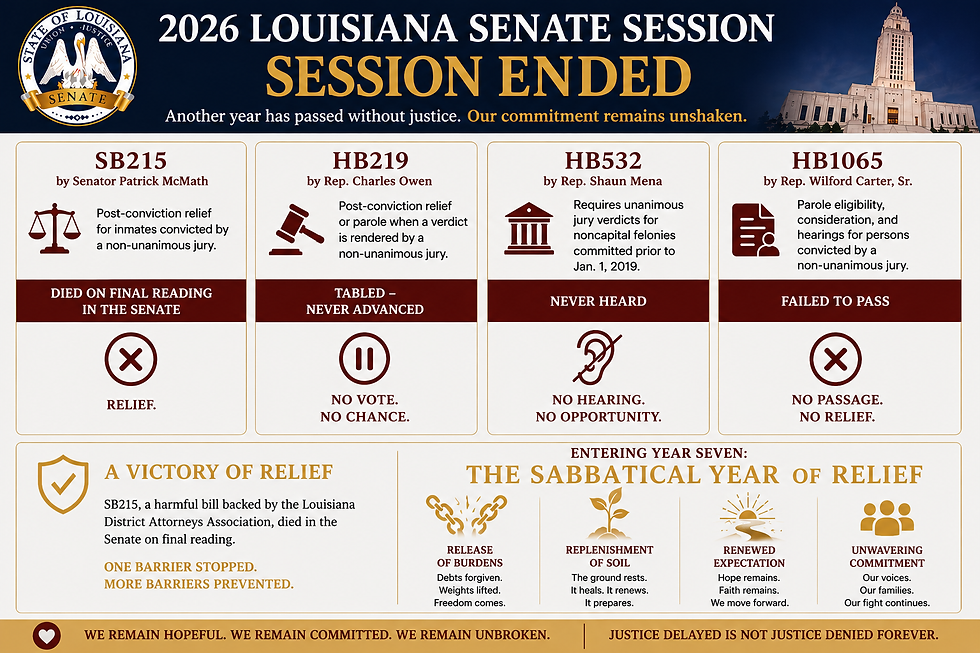
We work closely with families and individuals who are still living these realities every day—many of whom were convicted under systems we now know were fundamentally unjust. While progress has been made in acknowledging these issues, real pathways to justice remain limited.
We encourage our community to listen to stories like this. Not just to hear them—but to understand them.
To recognize the patterns. To see the human impact.
And to stand with the families still fighting for fairness, dignity, and truth.
Because justice should never depend on whether a story is told loud enough to be heard.
It should exist for everyone.

Comments